![]() |
![]() |
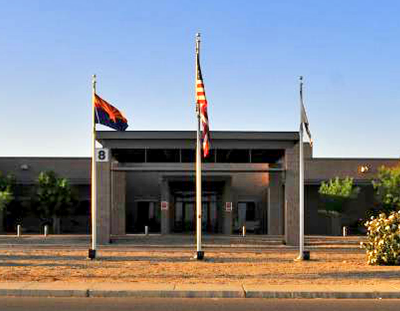
Have you ever paused to think about the buildings on the west side of Hu Hu Kam Memorial Hospital or the north side of the Komatke Health Center? For many of us, they simply are silent structures across the way. But to others, they are an entirely different world—one that far surpasses standards to provide optimal and quality care to enhance life for several in the Community. Gila River Health Care’s two dialysis centers were included in the 2008 Dialysis Facility Report (DFR), a report in which data was gathered from governmental forms for a dialysis facility compare (DFC) and published on Medicare.com in late 2008. Sergio commented that the facilities surpassed the standard for state, network, and national statistics. In fact, they were placed in the top 3 out of 60+ programs in Arizona. This is an astounding feat—especially noting that GRHC’s dialysis centers achieved these rankings in four categories: patient rehabilitation, decrease of mortality rates, usage of fistulas, and overall clinical outcomes including URR (urea reduction ratio), hemoglobin status between 10 and 12 percent, SMR (standardize mortality ratio), vascular access, and medical evidence forms. These last-mentioned forms received special recognition since the dialysis’s social worker educates each patient “on [his/her] options for dialysis and rehabilitation efforts.” As far as their huge success is concerned, dialysis associates attribute their success to their teamwork stemming from each associate’s diligence and dedication. Their accomplishments do not end here. Both dialysis centers have recently been redesigned in several ways with the intent of effectively creating a patient-friendly atmosphere. To begin, patient orientation was restructured: Patients are encouraged to visit the facility a day before treatment to experience a welcome by staff and give them a better opportunity to acclimate themselves to a new place and staff members. This is crucial since this time more effectively puts patients at ease with unfamiliar medical surroundings and care that might drastically impact their health. Dialysis strives to ensure each patient’s ease of mind by “creating an ambiance of comfort.” Another area of redesign at dialysis is the actual remodel of both centers. The remodels included the removal of the high desks that technicians once worked behind. Now technicians sit adjacent to the patient being treated. “If the patient is having any issues or concerns or problems,” Sergio said, technicians can now clearly see or hear them. Where previously Dialysis East could only function at 16 stations or treatment chairs, the center can now run at 21 stations, and that number will increase to an impressive 29 stations in a few months when new equipment arrives. At Dialysis West, the number of treatment chairs runs between 12-14 with the ability of running at 20 stations. The increase in stations, therefore, will allow Gila River Health Care to service all Tribal patients including those who go off the reservation for treatment. The dialysis’s success with the electronic health record is one more feat. Sergio explained: “Our medical records are about 90% electronic. We still have that 10% [remaining, but] at this point, nobody in the industry is at 100%.” Dialysis’s percentage of transferred medical records approaches the highest percentage possible with current standards in place. Once able, they will aim for making that number 100%. An added success is dialysis’s associate retention. Sergio commented that while GRHC’s human relations department is “very selective on who they want to bring in as a team,…it is important that we develop our own team. We hardly ever lose employees. Our turnover rate was less than a handful over an entire year which is amazing, and we continue to grow. We have also completed our new and improved policy and procedure manual.” The list continues even further: “Another major accomplishment is [that] we are currently servicing about 89% of Community patients,” Director Melendez commented. “We still have 11% that is out there either being serviced by the unit across the street [Fresenius] or within the area. But we improved it from 51% 3 years ago to about 89% right now. So we are growing considerably.” Dialysis East averages nearly 97 patients, and Dialysis West averages about 42 each seen three times a week on either Monday, Wednesday, and Friday or Tuesday, Thursday, and Saturday. One of dialysis’s highest priorities is educating its patients. This priority has expanded as dialysis plans to go beyond requirements to educate patient families and the Community as well. Dialysis has gone so far as to identify an educator to go out into the Community in an outreach that references the patient-family-centered care model. The educator is set to go into the different districts to teach separate sessions about kidneys and how to prevent kidney disease—a goal that Director Melendez emphasized. Dialysis staff do not simply want to maintain kidney disease but wants to prevent it altogether. Sergio explained, “We need to stop diabetes, but we can’t stop diabetes unless we capture [people who might be susceptible to diabetes] in grade school, and the focus should be at that. It shouldn’t be in high school, and it shouldn’t be in college, or it shouldn’t be in middle-aged people. It should be in the kids. [We should be] helping them by providing education and training to assist them in making an informed decision and facilitating an understanding of the underlying cause of renal failure; [and] furthermore, how to make better decisions for themselves.” Success has also pervaded dialysis’s finance statements and quality as well. Numbers “in the red” have shown a steady and pleasant progression downwards; i.e., numbers “in the red” have significantly become less. Expenses have declined; however, quality has not been sacrificed in its place. Rather, quality has increased. “So from an operations standpoint, it’s proven to be doing better,” Sergio said. Dialysis patients are receiving education on what to expect during their dialysis care and what they can do to make their treatment better. Dialysis has also put into place a service recovery program to establish rapport with patients who relate any less than satisfactory experience. Therefore, as you can see, Gila River Health Care’s dialysis centers are not simply quiet buildings across the way. Undoubtedly, Gila River Health Care’s dialysis centers challenge that thought. “It is people’s perception [that dialysis treatment is always] the same. No, it’s not true,” declared Director Melendez. “Every treatment is a different opportunity for us to educate our patients [and] staff. And no single day is the same. Work is exciting because we have different opportunities every day. Today might be a patient; tomorrow, it might be a staff member.” That is the attitude that makes dialysis successful. So while the list of accolades Sergio has to boast on both centers is long and full, every achievement distinctly declares their integral and implicit excellence—dialysis is visible and tangible proof of the best in healthcare. So whenever we see those quiet-looking buildings now, we can be reminded that the terms dialysis and exceptionally superior healthcare are inseparable. They are intrinsically one and the same. | ||||||||
| P.O. Box 38 - 483 West Seed Farm Road, Sacaton, Arizona 85147, (520) 562-3321, webmaster@grhc.org | |||||||||